The test
A figure is marked where they operated on people other than themselves, with intent, in a setting that was more than an experiment. Bernays took a cigarette account in 1929 and had a line of debutantes marching down Fifth Avenue on the Easter parade with lit Luckies, photographed for the morning papers as torches of freedom. Ignatius wrote the Exercises and then put novices through them, thirty days at a stretch. Gottlieb dosed men who had not agreed to be dosed. Each of them took the mechanism out of the study and ran it on somebody.
Everything unmarked is a cartographer by default. Saussure worked out how a sign carries meaning and left it on the page. Pavlov and Skinner built apparatus to measure what a dog or a pigeon would do under controlled conditions, and a laboratory built to measure a response is the setting the test deliberately excludes. Marcus Aurelius kept a training log, and the student was Marcus Aurelius.
The mark records operation and nothing more. Erickson relieved pain and Cameron destroyed minds, and the two marks are identical. Several of the marked figures also wrote the theory of what they had done, Bernays above all, and the mark leaves that alone.
An operator can be bigger than a man. A house, a firm or a school meets the same test, and entries of that size will carry the mark as they arrive.
Where the operators sit
Hypnosis and Altered States is marked straight through. Every figure on the shelf worked on somebody: a patient in a chair, a subject at the magnetised tub, an initiate in a rite. The mechanism has no armchair version.
Consciousness, Perception and Reality carries no marks at all. Hoffman ran evolutionary simulations to show that a creature tuned to see the truth loses to a creature tuned to stay alive. Penrose went looking for consciousness in the microtubules of the neuron. Neither of them ever walked into a room to change what somebody believed. It is the one shelf that is pure cartography.
Coercion and State Operations splits nearly down the middle, and the split is worth looking at. Gottlieb, Cameron and Angleton ran programmes. Lifton, Biderman and Seligman studied what programmes do to people. Seligman’s learned helplessness was then read by the men who designed an interrogation programme for the CIA, a use he has said he had no part in.
Language & Logic
1 of 5 marked. See the whole shelf →
Jacques Lacan
Psychoanalytic LinguisticsArgued across his seminars (1953–1980) that the unconscious is structured like a language. Desire does not pre-exist expression but circulates through chains of signifiers. The subject is an effect of language, not its origin. For Lacan, the deepest beliefs are not hidden thoughts waiting to be uncovered but positions within a linguistic structure that the subject never chose and cannot step outside.
Symbol, Meaning & Narrative
4 of 7 marked. See the whole shelf →
Carl Jung
Archetypes & the Collective UnconsciousProposed, developing the model across decades of clinical work from the 1910s onward, an inherited symbolic vocabulary — what he called the collective unconscious — in which archetypes function as something like pre-installed firmware, shaping which beliefs feel true before the conscious mind evaluates them.

Jordan Peterson
MeaningDrawing on his clinical practice and Maps of Meaning (1999), maps how narrative structures provide the existential orientation that makes purposeful action possible — without a meaning-belief, the organism cannot generate sustained behaviour.
Viktor Frankl
PurposeDemonstrated as a psychiatrist and survivor of Auschwitz, documenting the evidence in Man's Search for Meaning (1946), that a human with a belief in meaning survives what a human without one cannot — the experimental validation that belief is load-bearing infrastructure, not decoration.
Yehudah Ashlag
Kabbalistic PsychologyArgued across his major works, including the Talmud Eser Sefirot (1937–1954) and his Sulam commentary on the Zohar, that all of creation is structured around the correction of desire — the transformation of receiving-for-self (lekabel) into receiving-in-order-to-give (lehashpia). For Ashlag, desire is the raw material of consciousness, and the direction it takes determines what a person believes before any proposition reaches them.
Consciousness, Perception & Reality
0 of 6 marked. See the whole shelf →
No figure on this shelf is marked.
Rhetoric, Persuasion & Power
2 of 7 marked. See the whole shelf →
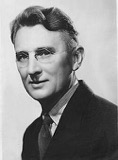
Dale Carnegie
Sales & RapportDemonstrated in How to Win Friends and Influence People (1936) that the fastest path to belief installation is not argument but rapport — a person who feels genuinely heard will accept propositions they would reject from a stranger, because trust disarms the critical faculty before the proposition arrives.
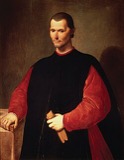
Niccolò Machiavelli
Power & IntimidationAmong the first Western analysts to treat power as engineering rather than morality — showing that the perception of strength, not strength itself, is what manufactures obedience.
Hypnosis & Altered States
6 of 6 marked. See the whole shelf →
Milton Erickson
HypnosisThe most influential clinical hypnotist of the twentieth century, Erickson proved that the critical faculty can be bypassed without the subject knowing it — through metaphor, pacing, and conversational misdirection, beliefs install themselves while the conscious mind thinks it is having a normal conversation.
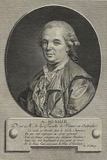
Franz Anton Mesmer
MesmerismClaimed to channel a force he called animal magnetism — and the Franklin Commission of 1784 debunked his mechanism while confirming the effects were real, attributing them to imagination and belief. For pistomechanics, the Commission's verdict matters more than Mesmer's own theory: the framework was false, but the somatic effects it produced were measurable. Belief engineered the body regardless.
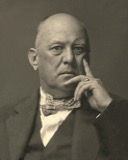
Aleister Crowley
Ritual MagickCrowley (1875–1947) defined magick as "the Science and Art of causing Change to occur in conformity with Will" — treating ritual explicitly as a belief-installation technology, with the practitioner as both engineer and subject.
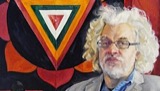
Phil Hine
Chaos MagickTested belief-as-technology to its limit: the chaos magick programme of adopting and discarding belief systems at will, reporting through sustained subjective exploration that belief installation works and that belief removal without replacement does not.
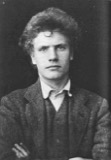
Austin Osman Spare
Sigil MagickDeveloped, from the 1910s onward, a technique for bypassing the conscious mind by encoding a desire as a visual symbol, then forgetting the original intention — allowing the sigil to install directly into the subconscious without interference from the critical faculty. The method prefigured and directly influenced chaos magick, and remains the clearest demonstration that belief installation works best when the installer is not watching.
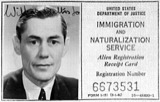
William Sargant
Faith Healing & Mass ConversionArgued, drawing on clinical observations of shell-shock and religious conversion (Battle for the Mind, 1957), that rhythmic nervous-system overload produces cortical inhibition — a state in which the brain accepts any belief offered as replacement for the one that just collapsed. The proposed mechanism behind revival conversions, battle shock, and political rallies.
Group & Collective Dynamics
3 of 8 marked. See the whole shelf →
Kurt Lewin
Group DynamicsThe founder of social psychology's experimental tradition, Lewin showed through his 1940s field experiments that a belief resisted in isolation is accepted in a group — the social field does not merely pressure compliance but genuinely rewrites what the individual perceives as true.

Werner Erhard
Large Group Awareness TrainingIndustrialised mass belief transformation through est (Erhard Seminars Training, launched 1971), combining group pressure, marathon sessions, and identity confrontation into a commercial product — demonstrating that pistomechanical methods scale to paying audiences.
Steven Hassan
Cult DynamicsOperationalised the BITE Model — Behaviour, Information, Thought, Emotional control — the diagnostic checklist for recognising when a group has crossed from influence into identity capture. Cult dynamics are fundamentally group phenomena: the mechanism requires social reinforcement, isolation from outside reference points, and collective reality-construction.
Propaganda & Mass Engineering
4 of 6 marked. See the whole shelf →
Edward Bernays
Public Relations & PropagandaFreud's nephew and the author of Propaganda (1928), Bernays proved that you do not need to persuade people if you can engineer the environment in which they form opinions — the shift from arguing for a belief to manufacturing the conditions under which it installs itself.
David Ogilvy
MarketingWriting from two decades of campaign data in Confessions of an Advertising Man (1963), Ogilvy treated advertising as applied belief science — measuring which words, images, and sequences reliably install desire in a target population, proving that belief modification is quantifiable.
Paul Linebarger
Psychological OperationsWrote the operational manual for military-grade belief warfare in Psychological Warfare (1948, revised 1954) — the explicit, field-tested doctrine for breaking an enemy's will by engineering what they believe about their own situation.
Steve Bannon
Post-Truth PoliticsOperationalised the strategy of information flooding — proving that you do not need to install a specific belief if you can destroy the target population's capacity to distinguish belief from noise.
Coercion & State Operations
5 of 9 marked. See the whole shelf →
Sidney Gottlieb
MKUltraDirected the CIA's attempts to chemically erase and reprogram human identity — the most extreme documented case of treating a human mind as a belief system to be overwritten.
Donald Ewen Cameron
Psychic DrivingThe McGill University psychiatrist whose CIA-funded experiments in the 1950s and 1960s attempted to erase and rebuild human personality through sensory deprivation, electroshock, and forced repetition of recorded messages. Cameron treated identity as a writable medium. His subjects were destroyed, not freed. The programme remains the clearest evidence that total belief erasure does not produce a blank slate but a broken person.

James Mitchell & Bruce Jessen
Enhanced InterrogationThe two psychologists who reverse-engineered the U.S. military's SERE resistance-training programme into an operational interrogation doctrine for the CIA after 2001 — converting a programme designed to inoculate against coercive belief modification into a programme that applied it, demonstrating that the same mechanism serves defence and attack with only intent reversed.
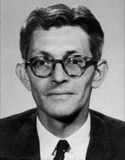
James Angleton
Tradecraft & CounterintelligenceThe CIA's chief of counterintelligence from 1954 to 1975, Angleton operated in the "wilderness of mirrors" where manufactured reality and disinformation become indistinguishable from truth — the limit case of belief engineering applied to institutions instead of individuals.
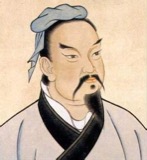
Sun Tzu
Strategic DeceptionEstablished in The Art of War (fifth century BC) the foundational axiom: all warfare is deception. Victory belongs to whoever controls the enemy's beliefs about the battlefield — the original statement that reality is a variable, not a constant.
Formation & Self-Mastery
4 of 6 marked. See the whole shelf →
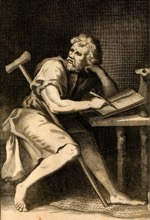
Epictetus
Discipline of AssentHeld that the one thing wholly in a person’s power is what he assents to, which makes assent the operating lever of the entire tradition.
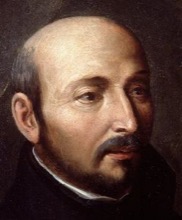
Ignatius of Loyola
Spiritual ExercisesBuilt a scripted four-week programme with a daily examen and formal rules for telling one inner movement from another.
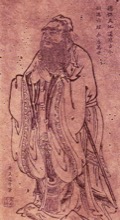
Confucius
Formation by RiteThe Four Books make character a curriculum, with ritual practice as the mechanism that shapes a person into a role.
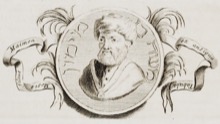
Maimonides
The Middle WayThe Eight Chapters set out a medical model of character: traits as dispositions, corrected by deliberate counter-practice.
Kinship, Lineage & Inheritance
4 of 9 marked. See the whole shelf →
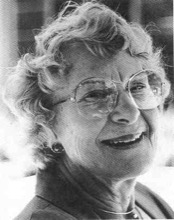
Virginia Satir
Family SculptingPlaced family members in physical arrangements so the structure a family cannot say aloud becomes visible in the room.
Bert Hellinger
Orders of LoveNamed belonging, precedence and balance as the conditions a family system enforces, and built a staged method for making them visible.
Murray Bowen
Differentiation of SelfMapped multigenerational transmission and defined maturity as autonomy and connection rising together rather than trading off.
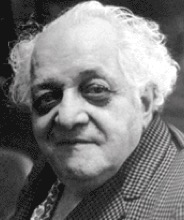
Jacob L. Moreno
Auxiliary EgoInvented psychodrama and the stand-in who plays a role for the protagonist, which is the ancestor of every representative in a constellation.
Neuropharmacology & Entheogens
2 of 7 marked. See the whole shelf →
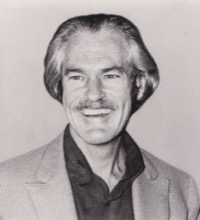
Timothy Leary
Set and SettingNamed the two variables that decide what a dose does, and wrote the experience a manual by adapting a Tibetan funerary text.
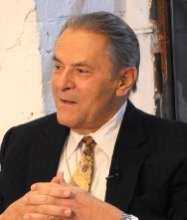
Stanislav Grof
Holotropic StatesRan thousands of psychedelic therapy sessions before prohibition, then rebuilt the access route using breath instead of chemistry.
Environment, Sound & Architecture
2 of 8 marked. See the whole shelf →
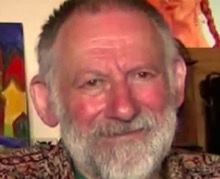
Christopher Alexander
Pattern LanguageArgued that built space carries patterns which produce reliable states in their inhabitants, and wrote the grammar for composing them.
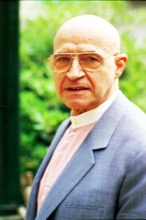
Alfred Tomatis
The Listening EarHeld that the ear conditions the voice and the nervous system together, and built a training method on filtered sound.
The close calls
These calls are close enough to argue about, and they are set out here at full strength.
Leary is marked and Huxley is not. Leary ran the psilocybin sessions on graduate students at Harvard and then on inmates at Concord state prison, and he recruited the subjects for both. Huxley took mescaline and wrote up what happened to Huxley.
Korzybski is unmarked, and it is the weakest call here. He trained roomfuls of people for years at the Institute of General Semantics. Teaching someone to notice the map is instruction, and instruction sits on the far side of the line from installation, so the seminars read as a school rather than an operation.
Cialdini is unmarked because he published the triggers for the people on the receiving end as much as for the people using them. Forty years of sales departments have read the book the other way, which makes the call a fact about Cialdini rather than a fact about what his publishing it did.
Lefebvre sits closest to the line of any unmarked figure. He built reflexive control as a mathematics for making an adversary choose badly by engineering the options he believes are open to him, and a Soviet apparatus took the method and ran it on real adversaries. He wrote the mathematics, and the apparatus ran it.
Robert Anton Wilson is unmarked because his exercises are run by the reader on the reader. Schafer is unmarked and Alexander is marked on that same distinction: Schafer surveyed the acoustic environment and taught people to hear it, Alexander built in it.
Each of these can flip on a better argument.