Language & Logic
The structural constraints of thought. Language determines the boundaries of what can be conceived. Logic provides the scaffolding that makes a belief system feel internally consistent, even when the premises are engineered.
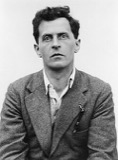
Ludwig Wittgenstein
LinguisticsArgued, across the arc from the Tractatus Logico-Philosophicus (1921) to the Philosophical Investigations (1953), that language does not describe a pre-existing world but generates the world available for belief. The beliefs you cannot articulate are the beliefs you cannot hold — and the beliefs you can articulate feel real because the words exist.
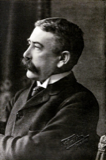
Ferdinand de Saussure
SemioticsEstablished in his Course in General Linguistics (published posthumously, 1916) the arbitrary link between a word and what it means, revealing that every shared vocabulary is a shared hallucination — an agreement about meaning that masquerades as a fact about the world.
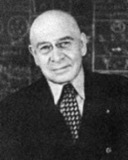
Alfred Korzybski
General SemanticsWriting in Science and Sanity (1933), named a core error in human reasoning: confusing the representation with the thing represented. Every belief is a map. The map always loses information. People who forget this fight over maps instead of looking at territory.
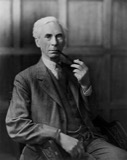
Bertrand Russell
LogicShowed, through the formal apparatus of Principia Mathematica (1910–1913, with Whitehead), that the structure of an argument can compel belief independently of whether its premises are true — an early formal demonstration that persuasion has a grammar.
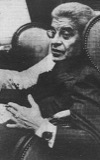
Jacques Lacan
Psychoanalytic Linguistics PistonautArgued across his seminars (1953–1980) that the unconscious is structured like a language. Desire does not pre-exist expression but circulates through chains of signifiers. The subject is an effect of language, not its origin. For Lacan, the deepest beliefs are not hidden thoughts waiting to be uncovered but positions within a linguistic structure that the subject never chose and cannot step outside.
Bibliography
- Alfred Korzybski, Science and Sanity (1933)
- Ferdinand de Saussure, Course in General Linguistics (1916)
- Ludwig Wittgenstein, Tractatus Logico-Philosophicus (1921)
- Alfred North Whitehead and Bertrand Russell, Principia Mathematica (1910–13)
- C. K. Ogden and I. A. Richards, The Meaning of Meaning (1923)
- C. K. Ogden, Bentham's Theory of Fictions (1932)
- Jacques Lacan, Écrits (1966)
- Jacques Lacan, Seminar XX: Encore (1975)
- Ibn Sina, Kitab al-Nafs, the psychology of the Shifa (11th century)
- Aristotle, Organon (4th century BC)
- Benjamin Lee Whorf, Language, Thought, and Reality (1956)
- George Lakoff and Mark Johnson, Metaphors We Live By (1980)
- J. L. Austin, How to Do Things with Words (1962)
- John Searle, Speech Acts (1969)
- John Searle, The Construction of Social Reality (1995)
Symbol, Meaning & Narrative
The delivery systems of belief. The human brain rejects raw propositions but accepts stories, images, and meaning-structures uncritically. A narrative smuggles belief past the conscious mind's defences. A symbol compresses an entire worldview into a single trigger. Meaning provides the infrastructure without which sustained action collapses.
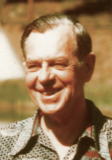
Joseph Campbell
Storytelling & MythIdentified in The Hero with a Thousand Faces (1949) a recurring narrative architecture across a striking range of traditions — the Hero's Journey, so widespread across unconnected cultures that it may reflect deep cognitive structures rather than mere literary convention.
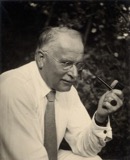
Carl Jung
Archetypes & the Collective Unconscious PistonautProposed, developing the model across decades of clinical work from the 1910s onward, an inherited symbolic vocabulary — what he called the collective unconscious — in which archetypes function as something like pre-installed firmware, shaping which beliefs feel true before the conscious mind evaluates them.
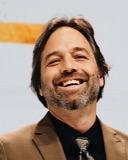
Jonathan Pageau
Symbolic WorldviewA contemporary icon carver and symbolist, Pageau demonstrates that symbolic hierarchies are not decorative but structural — they organise perception itself, determining what registers as meaningful and what is invisible.
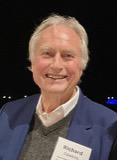
Richard Dawkins
MemeticsProposed in The Selfish Gene (1976) that ideas behave like organisms: they replicate, mutate, and compete for survival in host minds — meaning beliefs spread not because they are true but because they are contagious.

Jordan Peterson
Meaning PistonautDrawing on his clinical practice and Maps of Meaning (1999), maps how narrative structures provide the existential orientation that makes purposeful action possible — without a meaning-belief, the organism cannot generate sustained behaviour.
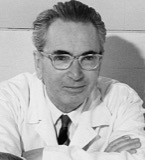
Viktor Frankl
Purpose PistonautDemonstrated as a psychiatrist and survivor of Auschwitz, documenting the evidence in Man's Search for Meaning (1946), that a human with a belief in meaning survives what a human without one cannot — the experimental validation that belief is load-bearing infrastructure, not decoration.
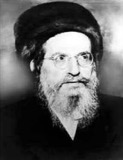
Yehudah Ashlag
Kabbalistic Psychology PistonautArgued across his major works, including the Talmud Eser Sefirot (1937–1954) and his Sulam commentary on the Zohar, that all of creation is structured around the correction of desire — the transformation of receiving-for-self (lekabel) into receiving-in-order-to-give (lehashpia). For Ashlag, desire is the raw material of consciousness, and the direction it takes determines what a person believes before any proposition reaches them.
Bibliography
- Joseph Campbell, The Hero with a Thousand Faces (1949)
- Erich Neumann, The Origins and History of Consciousness (1949)
- Edward F. Edinger, Ego and Archetype (1972)
- Roberto Assagioli, Psychosynthesis (1965)
- Jordan B. Peterson, Maps of Meaning: The Architecture of Belief (1999)
- Viktor Frankl, Man's Search for Meaning (1946)
- Sigmund Freud, New Introductory Lectures on Psychoanalysis (1933)
- Robert Kegan, The Evolving Self (1982)
- Robert Kegan, In Over Our Heads (1994)
- Richard Dawkins, The Selfish Gene (1976)
- Yehuda Ashlag, Talmud Eser HaSefirot (1937–54)
- Alasdair MacIntyre, After Virtue (1981)
- Carl Jung, The Archetypes and the Collective Unconscious (1959)
- Roland Barthes, Mythologies (1957)
- René Girard, Deceit, Desire, and the Novel (1961)
- Baruch Spinoza, Tractatus Theologico-Politicus (1670)
- David Friedrich Strauss, The Life of Jesus Critically Examined (1835)
- Friedrich Nietzsche, The Gay Science (1882)
- Friedrich Nietzsche, On the Genealogy of Morals (1887)
- Franz Rosenzweig, The Star of Redemption (1921)
- Rudolf Bultmann, New Testament and Mythology (1941)
- Northrop Frye, The Great Code: The Bible and Literature (1982)
Consciousness, Perception & Reality
The rendering engine. Before a belief can be installed, there must be a reality in which to install it and a consciousness that experiences it. The question here is what perception and consciousness are at the substrate level. The mind constructs its experience of the real. Whether that construction has any access to reality as it actually is determines the limits of every other domain in the framework.

Donald Hoffman
Interface Theory of PerceptionProved mathematically, through his Fitness-Beats-Truth theorem developed at UC Irvine from the 2000s onward, that evolution optimises perception for survival payoffs, not for accuracy — meaning perceived reality is a species-specific user interface, not a window onto the world. If Hoffman is right, every belief operates on a representation that was never designed to be true.

Roger Penrose
Quantum ConsciousnessArgued in The Emperor's New Mind (1989) and subsequent work with Stuart Hameroff on Orchestrated Objective Reduction that consciousness is a quantum process occurring in neuronal microtubules, not a computation. If the model holds, belief operates at a deeper physical layer than cognitive science assumes, and the mind cannot be fully reverse-engineered by classical means.
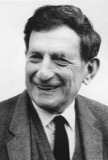
David Bohm
Implicate OrderProposed in Wholeness and the Implicate Order (1980) that perceived reality is an unfolded surface — the explicate order — of a deeper, enfolded structure. His decades of dialogue with Krishnamurti on the nature of thought led him to argue that thought itself is a system that generates the illusion of a thinker separate from the world — making belief not a property of the observer but a structural feature of the observation.
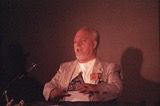
Robert Anton Wilson
Reality TunnelsDemonstrated in Prometheus Rising (1983) the Thinker/Prover mechanism: whatever the Thinker thinks, the Prover proves. Every person inhabits a self-sealing perceptual filter that manufactures evidence for its own assumptions.
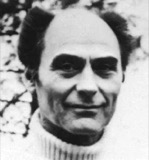
Itzhak Bentov
Holographic RealityWriting in Stalking the Wild Pendulum (1977), modelled consciousness as a frequency-decoding system, implying that what we call material reality is itself a rendered output — making every belief about "the real world" a belief about a belief.

David Chalmers
The Hard ProblemNamed in his 1995 paper and The Conscious Mind (1996) the question underneath all of pistomechanics: why is there subjective experience at all? If consciousness cannot be reduced to physical processes, then belief is not merely a pattern in neural tissue but a phenomenon that requires its own explanatory framework — one that no amount of neuroscience alone can provide.
Bibliography
- Donald Hoffman, The Case Against Reality (2019)
- Roger Penrose, The Emperor's New Mind (1989)
- David Bohm, Wholeness and the Implicate Order (1980)
- David Chalmers, The Conscious Mind (1996)
- Robert Anton Wilson, Prometheus Rising (1983)
- Itzhak Bentov, Stalking the Wild Pendulum (1977)
- Daniel Kahneman, Thinking, Fast and Slow (2011)
- Antonio Damasio, Descartes' Error (1994)
- Antonio Damasio, The Feeling of What Happens (1999)
- Stephen Porges, The Polyvagal Theory (2011)
- Andrew Newberg and Mark Robert Waldman, Why We Believe What We Believe (2006)
- Andrew Newberg and Mark Robert Waldman, How God Changes Your Brain (2009)
- Andrew Newberg and Mark Robert Waldman, Words Can Change Your Brain (2012)
- Andrew Newberg, How Enlightenment Changes Your Brain (2016)
- Andrew Newberg, Neurotheology (2018)
- Andrew Newberg, Sex, God, and the Brain (2022)
- Gregory Bateson, Steps to an Ecology of Mind (1972)
- William James, The Principles of Psychology (1890)
- William James, The Varieties of Religious Experience (1902)
- Julian Jaynes, The Origin of Consciousness in the Breakdown of the Bicameral Mind (1976)
- Iain McGilchrist, The Master and His Emissary (2009)
- Roger Penrose, Shadows of the Mind (1994)
- Stuart Hameroff and Roger Penrose, “Consciousness in the Universe: A Review of the Orch OR Theory,” Physics of Life Reviews (2014)
- Giulio Tononi, “An Information Integration Theory of Consciousness,” BMC Neuroscience (2004)
- Giulio Tononi, Phi: A Voyage from the Brain to the Soul (2012)
- John Archibald Wheeler, “Information, Physics, Quantum: The Search for Links” (1989)
- Eugene Wigner, “Remarks on the Mind-Body Question” (1961)
- Henry Stapp, Mindful Universe (2007)
- Bernardo Kastrup, The Idea of the World (2019)
- Daniel Dennett, Consciousness Explained (1991)
- Thomas Metzinger, Being No One (2003)
- Thomas Metzinger, The Ego Tunnel (2009)
- Bernard Baars, A Cognitive Theory of Consciousness (1988)
- Stanislas Dehaene, Consciousness and the Brain (2014)
- Anil Seth, Being You: A New Science of Consciousness (2021)
- Michael Graziano, Consciousness and the Social Brain (2013)
- Karl Friston, “The Free-Energy Principle: A Unified Brain Theory?” Nature Reviews Neuroscience (2010)
- Andy Clark, Surfing Uncertainty (2016)
- Andy Clark and David Chalmers, “The Extended Mind,” Analysis (1998)
- Francisco Varela, Evan Thompson and Eleanor Rosch, The Embodied Mind (1991)
- Humberto Maturana and Francisco Varela, Autopoiesis and Cognition (1980)
- Douglas Hofstadter, Gödel, Escher, Bach (1979)
- Douglas Hofstadter, I Am a Strange Loop (2007)
Rhetoric, Persuasion & Power
The engineering of compliance. These practitioners mapped the mechanical triggers — reciprocity, authority, scarcity, fear, desire — that bypass analytical thought and produce automatic agreement. Power is the control of definitions, not the application of force.
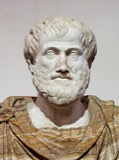
Aristotle
RhetoricCodified the three attack surfaces of belief — the speaker's credibility (ethos), the audience's emotion (pathos), and the argument's structure (logos) — establishing that persuasion is a technical discipline with repeatable methods, not a talent.

Robert Cialdini
PersuasionIsolated in Influence: The Psychology of Persuasion (1984) six mechanical triggers — reciprocity, commitment, social proof, authority, liking, scarcity — that produce compliance automatically, proving that most agreement is not reasoned but triggered.
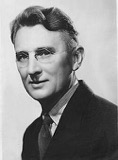
Dale Carnegie
Sales & Rapport PistonautDemonstrated in How to Win Friends and Influence People (1936) that the fastest path to belief installation is not argument but rapport — a person who feels genuinely heard will accept propositions they would reject from a stranger, because trust disarms the critical faculty before the proposition arrives.
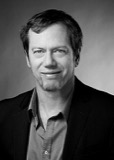
Robert Greene
Seduction & PowerStripped the moral packaging from influence operations in The 48 Laws of Power (1998) to expose the bare mechanics — proving that the same structural moves operate whether the context is a court, a boardroom, or a bedroom.
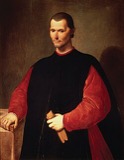
Niccolò Machiavelli
Power & Intimidation PistonautAmong the first Western analysts to treat power as engineering rather than morality — showing that the perception of strength, not strength itself, is what manufactures obedience.
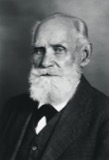
Ivan Pavlov
Classical ConditioningDemonstrated in his 1890s–1900s experiments at the Imperial Institute of Experimental Medicine that a neutral stimulus, paired repeatedly with a meaningful one, acquires the power of the original. The dog salivates at the bell. The mechanism is pre-cognitive, pre-linguistic, and operates in every nervous system. Conditioning is belief installation at its most primitive: the organism learns to expect something, and the expectation drives behaviour before thought begins.
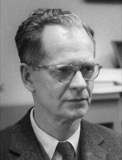
B.F. Skinner
Operant ConditioningExtended conditioning from stimulus-response to consequence-driven behaviour in The Behavior of Organisms (1938) and Science and Human Behavior (1953). Reinforcement schedules shape what an organism does, and by extension what it comes to believe about what works. Variable-ratio reinforcement — the slot machine schedule — produces the most persistent behaviour. Social media feeds, gamified apps, and advertising funnels run on Skinner's mechanics whether or not their designers have read him.
Bibliography
- Aristotle, Rhetoric (4th century BC)
- Aristotle, Poetics (4th century BC)
- Robert Cialdini, Influence: The Psychology of Persuasion (1984)
- Dale Carnegie, How to Win Friends and Influence People (1936)
- Robert Greene, The 48 Laws of Power (1998)
- Niccolò Machiavelli, The Prince (1532)
- Giordano Bruno, De Vinculis in Genere (c. 1591)
- Ioan P. Couliano, Eros and Magic in the Renaissance (1984)
- Ivan Pavlov, Conditioned Reflexes (1927)
- B. F. Skinner, Science and Human Behavior (1953)
- Paul Watzlawick, John Weakland and Richard Fisch, Change (1974)
- Plato, Gorgias (4th century BC)
- Cicero, De Oratore (55 BC)
- Quintilian, Institutio Oratoria (1st century)
Hypnosis & Altered States
Direct access to the operating system. When the conscious mind's critical faculty is suspended — through trance, ritual, rhythm, or chemical intervention — beliefs can be written directly to the deeper layers of the mind without resistance.
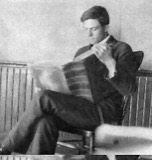
Milton Erickson
Hypnosis PistonautThe most influential clinical hypnotist of the twentieth century, Erickson proved that the critical faculty can be bypassed without the subject knowing it — through metaphor, pacing, and conversational misdirection, beliefs install themselves while the conscious mind thinks it is having a normal conversation.
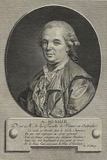
Franz Anton Mesmer
Mesmerism PistonautClaimed to channel a force he called animal magnetism — and the Franklin Commission of 1784 debunked his mechanism while confirming the effects were real, attributing them to imagination and belief. For pistomechanics, the Commission's verdict matters more than Mesmer's own theory: the framework was false, but the somatic effects it produced were measurable. Belief engineered the body regardless.
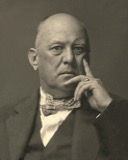
Aleister Crowley
Ritual Magick PistonautCrowley (1875–1947) defined magick as "the Science and Art of causing Change to occur in conformity with Will" — treating ritual explicitly as a belief-installation technology, with the practitioner as both engineer and subject.
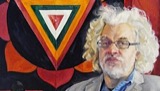
Phil Hine
Chaos Magick PistonautTested belief-as-technology to its limit: the chaos magick programme of adopting and discarding belief systems at will, reporting through sustained subjective exploration that belief installation works and that belief removal without replacement does not.
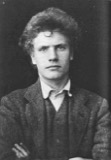
Austin Osman Spare
Sigil Magick PistonautDeveloped, from the 1910s onward, a technique for bypassing the conscious mind by encoding a desire as a visual symbol, then forgetting the original intention — allowing the sigil to install directly into the subconscious without interference from the critical faculty. The method prefigured and directly influenced chaos magick, and remains the clearest demonstration that belief installation works best when the installer is not watching.
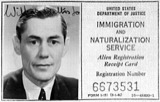
William Sargant
Faith Healing & Mass Conversion PistonautArgued, drawing on clinical observations of shell-shock and religious conversion (Battle for the Mind, 1957), that rhythmic nervous-system overload produces cortical inhibition — a state in which the brain accepts any belief offered as replacement for the one that just collapsed. The proposed mechanism behind revival conversions, battle shock, and political rallies.
Bibliography
- Sidney Rosen (ed.), My Voice Will Go With You: The Teaching Tales of Milton H. Erickson (1982)
- Richard Bandler and John Grinder, The Structure of Magic (1975)
- Richard Bandler and John Grinder, Patterns of the Hypnotic Techniques of Milton H. Erickson (1975)
- Dave Elman, Hypnotherapy (1964)
- John C. Lilly, Programming and Metaprogramming in the Human Biocomputer (1968)
- John C. Lilly, Simulations of God (1975)
- William Sargant, Battle for the Mind (1957)
- Aleister Crowley, Book 4 (1913)
- Israel Regardie, The Complete Golden Dawn System of Magic (1984)
- Franz Bardon, Initiation into Hermetics (1956)
- Austin Osman Spare, The Book of Pleasure (1913)
- Peter J. Carroll, Liber Null & Psychonaut (1987)
- Phil Hine, Condensed Chaos (1995)
- Brian Copenhaver (trans.), Hermetica (1992)
- Mircea Eliade, Shamanism: Archaic Techniques of Ecstasy (1951)
- Maya Deren, Divine Horsemen: The Living Gods of Haiti (1953)
- Aldous Huxley, The Doors of Perception (1954)
- Helena Blavatsky, Isis Unveiled (1877)
- Helena Blavatsky, The Secret Doctrine (1888)
Group & Collective Dynamics
The amplification layer. Individual belief is fragile. Collective belief is structural. When a group synchronizes around a shared narrative, the result is not social pressure but an alteration of each member's experienced reality.
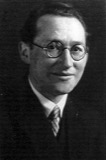
Kurt Lewin
Group Dynamics PistonautThe founder of social psychology's experimental tradition, Lewin showed through his 1940s field experiments that a belief resisted in isolation is accepted in a group — the social field does not merely pressure compliance but genuinely rewrites what the individual perceives as true.

Werner Erhard
Large Group Awareness Training PistonautIndustrialised mass belief transformation through est (Erhard Seminars Training, launched 1971), combining group pressure, marathon sessions, and identity confrontation into a commercial product — demonstrating that pistomechanical methods scale to paying audiences.
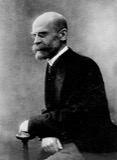
Émile Durkheim
Collective EffervescenceWriting in The Elementary Forms of Religious Life (1912), identified the mechanism by which congregational focus generates a shared experience perceived as external divine force — the engineering basis of every religious service, political rally, and stadium concert.

Marcel Mauss
Mana & Collective ForceCatalogued in A General Theory of Magic (1902, with Hubert) the operating rules of mana — the impersonal force that dozens of unrelated cultures independently identified as the substance of belief. Mana transfers between persons and objects, accumulates with age and repetition, scales with the number of believers, spreads by proximity, and requires socially designated operators. Mauss thought he was describing a primitive category. He was describing the mechanics of collective belief before anyone called it that.
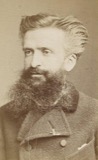
Gustave Le Bon
Mob PsychologyAmong the first, in The Crowd (1895), to observe that individuals in crowds surrender much of their critical faculty and enter a highly suggestible state. Later refined by Reicher and Drury, who showed the surrender is selective rather than total — but the core observation stands: group context dramatically lowers the threshold for belief installation.

Frans de Waal
EthologyThe primatologist whose four decades of field and laboratory research at Emory demonstrated that primate authority requires coalition-building, grooming, and psychological strategy — dominance hierarchies are not about force but about the management of belief in who is dominant.
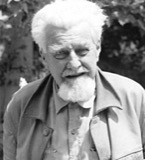
Konrad Lorenz
Imprinting & DominanceThe 1973 Nobel laureate in Physiology or Medicine, Lorenz discovered that imprinting in precocial birds hardwires authority-recognition in a critical developmental window — a mechanism specific to certain species but suggestive by analogy: the earliest form of belief installation may be biological, not cultural. The organism may arrive with circuitry biased to accept the first authority signal it receives.

Steven Hassan
Cult Dynamics PistonautOperationalised the BITE Model — Behaviour, Information, Thought, Emotional control — the diagnostic checklist for recognising when a group has crossed from influence into identity capture. Cult dynamics are fundamentally group phenomena: the mechanism requires social reinforcement, isolation from outside reference points, and collective reality-construction.
Bibliography
- Émile Durkheim, The Elementary Forms of Religious Life (1912)
- Marcel Mauss and Henri Hubert, A General Theory of Magic (1902)
- Gustave Le Bon, The Crowd (1895)
- Victor Turner, The Ritual Process: Structure and Anti-Structure (1969)
- Frans de Waal, Chimpanzee Politics (1982)
- Steven Hassan, Combating Cult Mind Control (1988)
- Marshall Sahlins, Stone Age Economics (1972)
- Yuval Noah Harari, Sapiens (2014)
- Thomas Kuhn, The Structure of Scientific Revolutions (1962)
- Eric Hoffer, The True Believer (1951)
- Benedict Anderson, Imagined Communities (1983)
- Arnold van Gennep, The Rites of Passage (1909)
- Pierre Bourdieu, Outline of a Theory of Practice (1977)
- Laurence Iannaccone, “Why Strict Churches Are Strong,” American Journal of Sociology (1994)
- Joseph Henrich, The Secret of Our Success (2015)
- Ernest Renan, “What Is a Nation?” (1882)
- Ernest Gellner, Nations and Nationalism (1983)
- Eric Hobsbawm and Terence Ranger (eds.), The Invention of Tradition (1983)
- Anthony D. Smith, The Ethnic Origins of Nations (1986)
- Michael Billig, Banal Nationalism (1995)
- Charles Tilly, Coercion, Capital and European States (1990)
Propaganda & Mass Engineering
Industrial-scale reality manufacturing. The same mechanisms that operate on individuals are scaled to populations through media, advertising, and political communication. The goal is not to convince but to install — to make a manufactured reality feel like common sense.
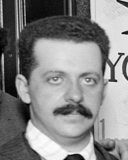
Edward Bernays
Public Relations & Propaganda PistonautFreud's nephew and the author of Propaganda (1928), Bernays proved that you do not need to persuade people if you can engineer the environment in which they form opinions — the shift from arguing for a belief to manufacturing the conditions under which it installs itself.
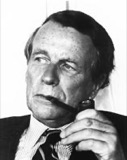
David Ogilvy
Marketing PistonautWriting from two decades of campaign data in Confessions of an Advertising Man (1963), Ogilvy treated advertising as applied belief science — measuring which words, images, and sequences reliably install desire in a target population, proving that belief modification is quantifiable.
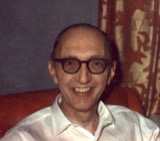
Paul Linebarger
Psychological Operations PistonautWrote the operational manual for military-grade belief warfare in Psychological Warfare (1948, revised 1954) — the explicit, field-tested doctrine for breaking an enemy's will by engineering what they believe about their own situation.

Steve Bannon
Post-Truth Politics PistonautOperationalised the strategy of information flooding — proving that you do not need to install a specific belief if you can destroy the target population's capacity to distinguish belief from noise.
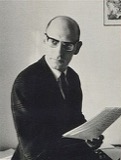
Michel Foucault
Institutional PowerArgued across works from Discipline and Punish (1975) to The History of Sexuality (1976–1984) that institutions engineer compliance not through overt force but through the control of categories — whoever defines what counts as knowledge, sanity, and truth controls the belief layer beneath all others.
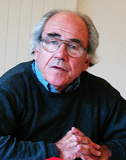
Jean Baudrillard
HyperrealityArgued in Simulacra and Simulation (1981) that representations can overwrite the reality they originally described, creating a simulation that feels more real than the original — the terminal stage of belief engineering at civilisational scale, where propaganda no longer needs to contradict reality because it has become reality.
Bibliography
- Edward Bernays, Propaganda (1928)
- David Ogilvy, Confessions of an Advertising Man (1963)
- Paul Linebarger, Psychological Warfare (1948)
- Michel Foucault, Discipline and Punish (1975)
- Jean Baudrillard, Simulacra and Simulation (1981)
- Jacques Ellul, Propaganda: The Formation of Men's Attitudes (1962)
- Walter Lippmann, Public Opinion (1922)
- Marshall McLuhan, Understanding Media (1964)
- Neil Postman, Amusing Ourselves to Death (1985)
- Edward Herman and Noam Chomsky, Manufacturing Consent (1988)
- Vance Packard, The Hidden Persuaders (1957)
- Shoshana Zuboff, The Age of Surveillance Capitalism (2019)
Coercion & State Operations
The weaponization of belief engineering. When consent is not required, the full machinery of pistomechanics can be applied without restraint — from psychological torture to pharmacological reprogramming to geopolitical deception operations.
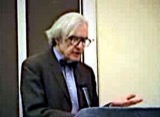
Robert Jay Lifton
Thought ReformMapped in Thought Reform and the Psychology of Totalism (1961) the eight criteria by which totalitarian systems dismantle individual identity — the complete engineering spec for replacing a person's belief system with an institutional one.

Albert Biderman
CoercionDrawing on his 1957 study of Korean War POW interrogations for the U.S. Air Force, created the chart of coercion mapping the exact sequence — isolation, exhaustion, degradation, occasional indulgence — that breaks resistance and installs compliance in any human being.
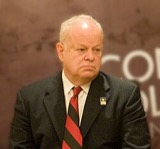
Martin Seligman
Learned HelplessnessDemonstrated through his landmark 1967 experiments at the University of Pennsylvania that systematic, inescapable stress does not merely discourage but rewires the brain's belief in its own agency — the neurological mechanism behind why victims of abuse stop trying to leave.
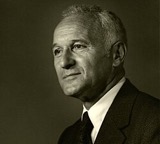
Sidney Gottlieb
MKUltra PistonautDirected the CIA's attempts to chemically erase and reprogram human identity — the most extreme documented case of treating a human mind as a belief system to be overwritten.
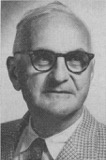
Donald Ewen Cameron
Psychic Driving PistonautThe McGill University psychiatrist whose CIA-funded experiments in the 1950s and 1960s attempted to erase and rebuild human personality through sensory deprivation, electroshock, and forced repetition of recorded messages. Cameron treated identity as a writable medium. His subjects were destroyed, not freed. The programme remains the clearest evidence that total belief erasure does not produce a blank slate but a broken person.

James Mitchell & Bruce Jessen
Enhanced Interrogation PistonautThe two psychologists who reverse-engineered the U.S. military's SERE resistance-training programme into an operational interrogation doctrine for the CIA after 2001 — converting a programme designed to inoculate against coercive belief modification into a programme that applied it, demonstrating that the same mechanism serves defence and attack with only intent reversed.
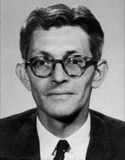
James Angleton
Tradecraft & Counterintelligence PistonautThe CIA's chief of counterintelligence from 1954 to 1975, Angleton operated in the "wilderness of mirrors" where manufactured reality and disinformation become indistinguishable from truth — the limit case of belief engineering applied to institutions instead of individuals.
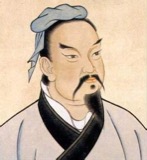
Sun Tzu
Strategic Deception PistonautEstablished in The Art of War (fifth century BC) the foundational axiom: all warfare is deception. Victory belongs to whoever controls the enemy's beliefs about the battlefield — the original statement that reality is a variable, not a constant.

Vladimir Lefebvre
Reflexive ControlA Soviet-trained mathematician who defected to the United States in 1974, Lefebvre developed the mathematical framework for inducing an adversary to make self-defeating decisions by engineering their perception of available options — belief weaponised as a targeting system.
Bibliography
- Robert Jay Lifton, Thought Reform and the Psychology of Totalism (1961)
- Albert Biderman, Communist Attempts to Elicit False Confessions from Air Force Prisoners of War (1957)
- Martin Seligman, Helplessness (1975)
- Judith Herman, Trauma and Recovery (1992)
- Sun Tzu, The Art of War (5th century BC)
- Auftragstaktik: The Basis for Modern Military Command (US Army monograph)
- Stanley Milgram, Obedience to Authority (1974)
- Hannah Arendt, The Origins of Totalitarianism (1951)
- KUBARK Counterintelligence Interrogation, declassified CIA manual (1963)
Formation & Self-Mastery
The curricula. Every tradition that trained receivers to govern their own intake built a graded path, and the Lab's curriculum distils them. These are the paths in their own words.
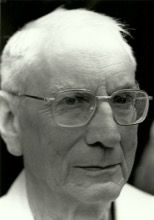
Pierre Hadot
Philosophy as PracticeRecovered the ancient schools as training regimes rather than doctrines, with the exercises meant to change the practitioner rather than settle an argument.
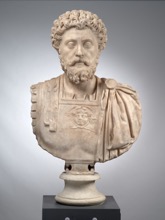
Marcus Aurelius
Stoic DrillThe Meditations are a private training log rather than a treatise, an emperor running the curriculum on himself night after night.

Epictetus
Discipline of Assent PistonautHeld that the one thing wholly in a person’s power is what he assents to, which makes assent the operating lever of the entire tradition.
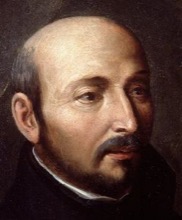
Ignatius of Loyola
Spiritual Exercises PistonautBuilt a scripted four-week programme with a daily examen and formal rules for telling one inner movement from another.

Confucius
Formation by Rite PistonautThe Four Books make character a curriculum, with ritual practice as the mechanism that shapes a person into a role.
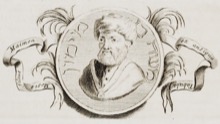
Maimonides
The Middle Way PistonautThe Eight Chapters set out a medical model of character: traits as dispositions, corrected by deliberate counter-practice.
Bibliography
- Pierre Hadot, Philosophy as a Way of Life (1995)
- Pierre Hadot, The Inner Citadel (1998)
- Marcus Aurelius, Meditations (2nd century)
- Marcus Tullius Cicero, De Officiis (44 BC)
- Benjamin Franklin, Autobiography, the thirteen virtues (1791)
- Moshe Chaim Luzzatto, Mesillat Yesharim (1740)
- Ignatius of Loyola, Spiritual Exercises (1548)
- John Climacus, The Ladder of Divine Ascent (7th century)
- Evagrius Ponticus, The Praktikos (4th century)
- Buddhaghosa, Visuddhimagga (5th century)
- Culadasa (John Yates), The Mind Illuminated (2015)
- Kakuan, The Ten Oxherding Pictures (12th century)
- Confucius, The Four Books, with the Great Learning
- Desiderius Erasmus, The Education of a Christian Prince (1516)
- Baldassare Castiglione, The Book of the Courtier (1528)
- P. D. Ouspensky, In Search of the Miraculous (1949)
- Werner Jaeger, Paideia: The Ideals of Greek Culture (1934–47)
- Mircea Eliade, The Sacred and the Profane (1957)
- Epictetus, Discourses and Enchiridion (2nd century)
- Seneca, Letters to Lucilius (1st century)
- Aristotle, Nicomachean Ethics (4th century BC)
- Patanjali, Yoga Sutras (c. 4th century)
- Bhagavad Gita
- Maimonides, Eight Chapters (12th century)
Kinship, Lineage & Inheritance
The first school, and the first register. Everyone attended one before he could refuse enrolment, and the family writes the deep layers long before school or media reach them. This shelf holds four trades working the same unit: transmission, how a family writes patterns into its descendants; narrative, the family story that predicts resilience better than any other single measure; registration, how descent is recorded, proven and claimed; and biology, what a genome settles and what it leaves open. The Lab draws its reading instrument for grips installed before memory from the first of these.

Virginia Satir
Family Sculpting PistonautPlaced family members in physical arrangements so the structure a family cannot say aloud becomes visible in the room.
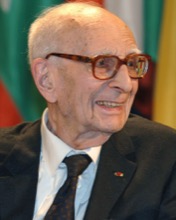
Claude Lévi-Strauss
Structures of KinshipArgued that kinship systems are formal structures of exchange rather than records of biology, which is why who counts as family varies while the rules hold.
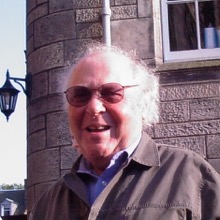
Marshall Sahlins
Mutuality of BeingDefined kinship as participation in one another’s existence, detaching it from descent without dissolving it.

Kim TallBear
Genetic Identity ClaimsExamined what a DNA result does to belonging, and who is authorised to convert a genome into a claim of peoplehood.

Alondra Nelson
The Social Life of DNAFollowed ancestry testing into families and courtrooms, tracing what people actually do with a result once they hold it.
Bert Hellinger
Orders of Love PistonautNamed belonging, precedence and balance as the conditions a family system enforces, and built a staged method for making them visible.
Murray Bowen
Differentiation of Self PistonautMapped multigenerational transmission and defined maturity as autonomy and connection rising together rather than trading off.
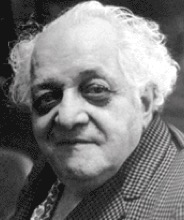
Jacob L. Moreno
Auxiliary Ego PistonautInvented psychodrama and the stand-in who plays a role for the protagonist, which is the ancestor of every representative in a constellation.

David Reich
Ancient DNAUsed ancient genomes to show that populations are recent mixtures rather than deep lineages, which unsettles most claims made on descent.
Bibliography
- Bert Hellinger, Love’s Hidden Symmetry (1998)
- Bert Hellinger, Acknowledging What Is (1999)
- Ivan Boszormenyi-Nagy and Geraldine Spark, Invisible Loyalties (1973)
- Ivan Boszormenyi-Nagy and Barbara Krasner, Between Give and Take (1986)
- Murray Bowen, Family Therapy in Clinical Practice (1978)
- Michael Kerr and Murray Bowen, Family Evaluation (1988)
- Virginia Satir, Conjoint Family Therapy (1964)
- Virginia Satir, Peoplemaking (1972)
- J. L. Moreno, Psychodrama, volume one (1946)
- Anne Ancelin Schützenberger, The Ancestor Syndrome (1998)
- Nicolas Abraham and Maria Torok, The Shell and the Kernel (1994)
- Monica McGoldrick and Randy Gerson, Genograms in Family Assessment (1985)
- Marshall Duke and Robyn Fivush, the Emory “Do You Know?” studies on family narrative and resilience (2000s)
- Elizabeth Shown Mills, Evidence Explained (2007)
- Samuel Morris Brown, In Heaven as It Is on Earth: Joseph Smith and the Early Mormon Conquest of Death (2012)
- International Human Genome Sequencing Consortium, “Initial Sequencing and Analysis of the Human Genome,” Nature (2001)
- J. Craig Venter et al., “The Sequence of the Human Genome,” Science (2001)
- David Reich, Who We Are and How We Got Here (2018)
- Adam Rutherford, A Brief History of Everyone Who Ever Lived (2016)
- Alondra Nelson, The Social Life of DNA (2016)
- Kim TallBear, Native American DNA (2013)
- Claude Lévi-Strauss, The Elementary Structures of Kinship (1949)
- David Schneider, American Kinship: A Cultural Account (1968)
- Marshall Sahlins, What Kinship Is – And Is Not (2013)
Neuropharmacology & Entheogens
The chemical route. Shelf V lists trance, ritual and rhythm among the ways past the critical faculty and names chemical intervention alongside them without naming a chemist; this shelf is that missing entry. The mechanism now has a model with a name, since psychedelics appear to relax the precision of high-level priors, which is a pharmacological way of describing a belief. Coercive pharmacology stays on shelf VIII, where consent is absent. Evidence tiers run wider here than anywhere else in the catalogue, from randomised trials to speculative entheogen scholarship, and both ends are kept on the shelf on purpose.
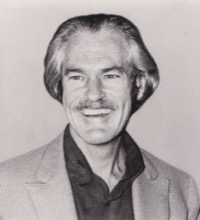
Timothy Leary
Set and Setting PistonautNamed the two variables that decide what a dose does, and wrote the experience a manual by adapting a Tibetan funerary text.
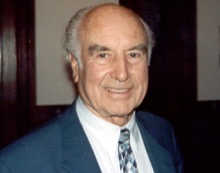
Albert Hofmann
LSDSynthesised the compound and took the first deliberate dose, then spent decades arguing about the conditions under which it should be used at all.
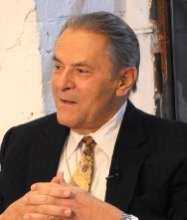
Stanislav Grof
Holotropic States PistonautRan thousands of psychedelic therapy sessions before prohibition, then rebuilt the access route using breath instead of chemistry.
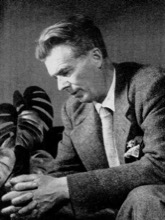
Aldous Huxley
The Reducing ValveTook Bergson’s figure and argued that the brain filters experience rather than producing it, and that a molecule can widen the aperture.
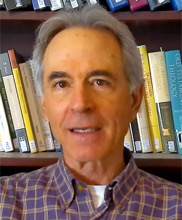
Rick Strassman
DMTRan the first American clinical study of a psychedelic in a generation and reported the phenomenology without deciding what it meant.

Robin Carhart-Harris
REBUSProposed that psychedelics relax the precision of high-level priors, which is a pharmacological description of loosening a belief.
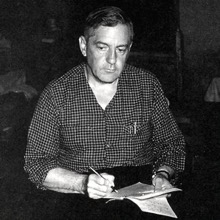
R. Gordon Wasson
Entheogen ScholarshipBrought the Mazatec mushroom rite to Western attention and argued that a psychoactive sacrament sat at the root of several religions.
Bibliography
- Robin Carhart-Harris and Karl Friston, “REBUS and the Anarchic Brain,” Pharmacological Reviews 71 (2019)
- Robin Carhart-Harris et al., “The Entropic Brain,” Frontiers in Human Neuroscience (2014)
- Roland Griffiths et al., “Psilocybin Can Occasion Mystical-Type Experiences,” Psychopharmacology (2006)
- Rick Strassman, DMT: The Spirit Molecule (2001)
- Aldous Huxley, The Doors of Perception (1954)
- Timothy Leary, Ralph Metzner and Richard Alpert, The Psychedelic Experience (1964)
- Stanislav Grof, Realms of the Human Unconscious (1975)
- Charles Tart (ed.), Altered States of Consciousness (1969)
- Albert Hofmann, LSD: My Problem Child (1979)
- R. Gordon Wasson, Soma: Divine Mushroom of Immortality (1968)
- R. Gordon Wasson, Albert Hofmann and Carl Ruck, The Road to Eleusis (1978)
- Benny Shanon, The Antipodes of the Mind (2002)
- Benny Shanon, “Biblical Entheogens: A Speculative Hypothesis,” Time and Mind (2008)
- Terence McKenna, Food of the Gods (1992)
- Jeremy Narby, The Cosmic Serpent (1998)
- Joel David Bakst, The Jerusalem Stone of Consciousness: DMT, Kabbalah and the Pineal Gland (2013)
Environment, Sound & Architecture
The room writes too. Built space, music and acoustics reach the deep layers without presenting a proposition, which is why a cathedral, a march and a waiting room each produce a reliable state in almost anyone who enters. These sources were filed under consciousness for years, where the mechanism stayed invisible; they work the aesthetic door, and they belong to it.
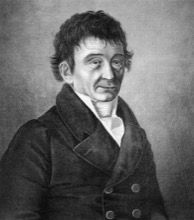
Ernst Chladni
Acoustic FiguresDrew a bow across a sand-covered plate and made standing waves visible, founding the study of how sound organises matter.
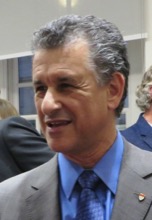
Daniel Levitin
Music and the BrainTraced what music does to attention, memory and the motor system, and why a melody installs more reliably than a sentence.
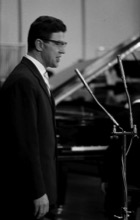
Joachim-Ernst Berendt
The World Is SoundArgued for hearing as the older and more encompassing sense, and for the ear as a route into states the eye cannot reach.
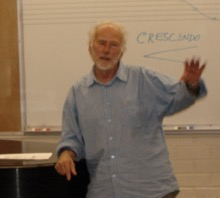
R. Murray Schafer
SoundscapeNamed the acoustic environment as a designed object, and asked what a place teaches its inhabitants through the sounds it permits.
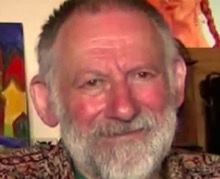
Christopher Alexander
Pattern Language PistonautArgued that built space carries patterns which produce reliable states in their inhabitants, and wrote the grammar for composing them.
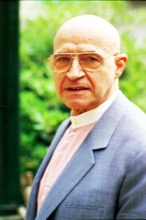
Alfred Tomatis
The Listening Ear PistonautHeld that the ear conditions the voice and the nervous system together, and built a training method on filtered sound.
Hans Jenny
CymaticsPhotographed sound organising matter into stable figures, giving the acoustic argument its visual evidence.

Colin Ellard
PsychogeographyMeasured what streets and rooms do to attention, stress and mood, turning architectural intuition into instrumented data.
Bibliography
- Daniel Levitin, This Is Your Brain on Music (2006)
- Joachim-Ernst Berendt, Nada Brahma: The World Is Sound (1983)
- Hans Jenny, Cymatics: A Study of Wave Phenomena and Vibration (1967)
- Alfred Tomatis, The Conscious Ear (1991)
- Christopher Alexander, The Timeless Way of Building (1979)
- Christopher Alexander, A Pattern Language (1977)
- Colin Ellard, Places of the Heart: The Psychogeography of Everyday Life (2015)
- Ernst Chladni, Entdeckungen über die Theorie des Klanges (1787)
- R. Murray Schafer, The Tuning of the World (1977)
Portrait credits
Most portraits on this page come from Wikimedia Commons under the licence noted beside each name; public-domain and CC0 images carry no attribution requirement, and the rest are credited to their photographers as their licences require. A few are reproduced from the subject’s own institutional or publisher page for identification. Any rights holder who would prefer their image removed should write to the address on the Agency page and it will be taken down.
Figures whose portrait is not available under a free licence carry their initials in place of a photograph rather than an unlicensed or synthesised image.
- Albert Hofmann (CC BY-SA 2.5, Philip H. Bailey (E-mail))
- Aldous Huxley (Public domain, Aldous Huxley)
- Alfred Tomatis (CC BY-SA 4.0, HappySoul24)
- Alondra Nelson (Public domain, Executive Office of the President of the United States)
- Christopher Alexander (CC BY-SA 4.0, Michaelmehaffy)
- Claude Lévi-Strauss (CC BY 3.0, UNESCO/Michel Ravassard)
- Confucius (Public domain, Wu Daozi, 685-758, Tang Dynasty.)
- Daniel Levitin (CC BY 2.0, Quebec UK)
- Epictetus (Public domain, William Sonmans / Michael Burghers)
- Ernst Chladni (Public domain, Ludwig Albert von Montmorillon)
- Ignatius of Loyola (Public domain)
- Joachim-Ernst Berendt (CC BY 4.0, Willy Pragher)
- Kim TallBear (CC BY 3.0, UQx World101x Anthropology of Current World Issues)
- Maimonides (Public domain, Blaisio Ugolino)
- Marcel Mauss (CC0, Société des Amis du Centre d'Études Sociologiques (SACES))
- Marcus Aurelius (CC BY-SA 4.0, Daniel Martin)
- Marshall Sahlins (CC BY 3.0, Elkziz)
- Pierre Hadot (CC0, © Despatin & Gobeli ( tous droits réservés))
- R. Murray Schafer (CC BY-SA 3.0, Eli n at en.wikipedia)
- Rick Strassman (CC BY 4.0, Rick Strassman)
- Robin Carhart-Harris (CC BY-SA 4.0, Thomas Angus, Imperial College London)
- Stanislav Grof (CC BY 3.0, Anton Nosik)
- Timothy Leary (Public domain, AP News)
- Virginia Satir (Public domain, w:User:William Meyer)
Synthesis
The domains above are views of a single engineering problem: how to modify what someone already believes. The receiving system is never blank. It is always running existing beliefs, and the operation is always working on that material — reinforcing, altering, replacing, or destroying what is already installed.
The preacher and the propagandist solve the same equation with different constraints. The framework's central claim is that when you strip the context, the mechanism converges every time: bypass the critical faculty, write to the deeper layer, let the system reorganise around the new instruction.
This is why the vocabulary of one domain illuminates every other. Cialdini's triggers explain why Durkheim's congregations produce conversion. Lifton's eight criteria describe what Erickson achieves gently. Bernays scales to populations what Carnegie accomplishes in a room. Most never read each other. They did not need to. They were all reverse-engineering the same machine.
Pistomechanics is the blueprint of that machine. The reason to study it is not to learn how to run it on others but to make the operation visible — to see the installation while it is happening, to name the mechanism before it finishes.
Papers & Studies Cited
- Bluma Zeigarnik, on interrupted tasks (1927)
- Solomon Asch, conformity experiments (1951)
- Robert Zajonc, mere exposure (1968)
- Amotz Zahavi, the handicap principle (1975)
- James Woodburn, immediate-return economies (1982)
- Paul Rozin, Linda Millman and Carol Nemeroff, contagion (1986)
- Terry Robinson and Kent Berridge, incentive sensitisation (1993)
- George Loewenstein, the information gap (1994)
- Roger Mayer, James Davis and F. David Schoorman, organisational trust (1995)
- Melanie Green and Timothy Brock, narrative transportation (2000)
- Roy Baumeister and colleagues, bad is stronger than good (2001)
- Gordon Hillman, on the origins of cultivation (2001)
- Catherine Harris, Ayşe Ayçiçeği and Jean Berko Gleason, taboo words in a second language (2003)
- Daniel Everett, on Pirahã (2005)
- Jonathan Winawer and colleagues, Russian blues (2007)
- Michael Frank and colleagues, number as a cognitive technology (2008)
- Richard Stephens, John Atkins and Andrew Kingston, swearing as a response to pain (2009)
- Phillippa Lally and colleagues, habit formation (2010)
- Hanne Thoen and colleagues, mantis shrimp colour vision (2014)